CEIE News
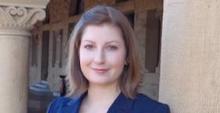
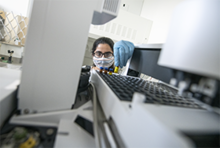 December 6, 2021Kirin Furst believes a systems approach is the best way to solve the world’s safe water problems. Her research lab is primarily focused on removing organic contaminants in drinking water systems and potable reuse systems.
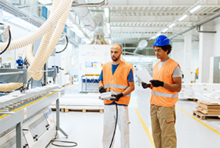 November 16, 2021Using virtual reality (VR) and artificial intelligence (AI), a team of researchers at George Mason University is taking a wrecking ball to barriers faced by neurodiverse individuals in construction.
 November 11, 2021The National Science Foundation (NSF)’s I-Corps program is an accelerator that helps entrepreneurs and researchers work together “to bring invention to impact.” Mason serves as an official I-Corps site, supporting local grantees through the exploratory stages of venture-building, as well as preparing them to apply for the national-level program.
- September 15, 2021Sam Salem wins recognition for outstanding teaching from the Construction Management Association of America,
 Civil engineering major Karla Pineda’s undergraduate career is about to end. Yet, as she prepares to embark on her accelerated master’s program, she reflects on what inspired her to study civil engineering.
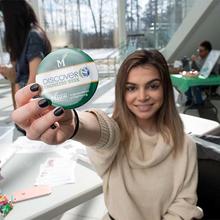 Engineers Week is a time to celebrate this important work and engage with other innovators. Even with social distancing, you can participate and share in the excitement.
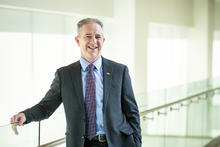 Mason Presidential Chief of Staff Ken Walsh's career is about building bridges. The story of the Brooklyn Bridge inspired him as a freshman engineering student, research on the soil near a bridge over the Salt River near Tempe, Arizona, kept him in graduate school, and his career in higher education has built bridges for students and communities around the world.
- George Mason University is poised to be named a managing member in the Cybersecurity Manufacturing Innovation Institute (CyManII), a $111 million public-private partnership led by the University of Texas at San Antonio.
 Environmental researcher Lucas Henneman is investigating air pollution’s impact on health. He uses large datasets and computer models to track pollution after it’s emitted from sources such as automobiles, coal power plants, and natural gas plants. The models help identify which people in nearby communities breathe in pollution.